// muhammad ahmed
I build games and the real-time multiplayer systems behind them: the netcode, voice, and infrastructure for shared VR.
I'm a game developer with 11+ years across shipped games and VR productivity apps. Most of that time has gone into one problem wearing different costumes: how do you keep hundreds of people in sync, in real time, without the latency or the cloud bill getting out of hand? At Arthur I built network LOD and rebuilt the app around WebGL so 100+ people could share a VR room in a browser with no install. At Immersed I did the same kind of scaling on my own networking stack instead of a third-party one, which also cut monthly infrastructure cost by around 65%.
That stack is open: FigNet, a transport-agnostic .NET networking framework; Entangle, the room layer that scales a single room past 300 players; and FnVoice, a voice engine that replaces a commercial dependency. I trust measurements more than opinions, like working close to the metal (.NET, Unity, a fair amount of C++ interop), and like handing other engineers tools that make the hard thing easy.
featured work
games & tools
immersed · vr metaverse collaboration
Immersed
Immersed ran on Photon Fusion, which capped scale and drove a steep monthly bill. I replaced it with my own real-time networking stack and owned the whole collaboration experience.
what i built
- Deployed my own networking framework (Entangle) in place of Photon Fusion, with area-of-interest and automatic state sync.
- Built a cross-platform VoIP stack with a C++ core so mobile users could join VR rooms.
- Owned the avatar pipeline (Genies, Meta, Ready Player Me) and moved room and user state from polling REST to WebSockets.
- Automated build and deployment on AWS EC2 (Linux).
arthur · vr virtual office
Arthur
Getting 100+ people into one VR room on a Quest 2 means fighting two budgets at once: bandwidth and frame time. Onboarding also relied on a costly cloud-streaming setup.
what i built
- Built network LOD and networking optimizations to keep bandwidth bounded as the room filled.
- Engineered a Smart Loading System that hands CPU and GPU budget to what matters (culling IK for out-of-view users, adaptive sharpening).
- Led a ground-up WebGL re-architecture that replaced costly AWS AppStream streaming, so users could join in a browser with no install.
- Designed a networked physics system (client-computed, server-distributed) as a microservice.
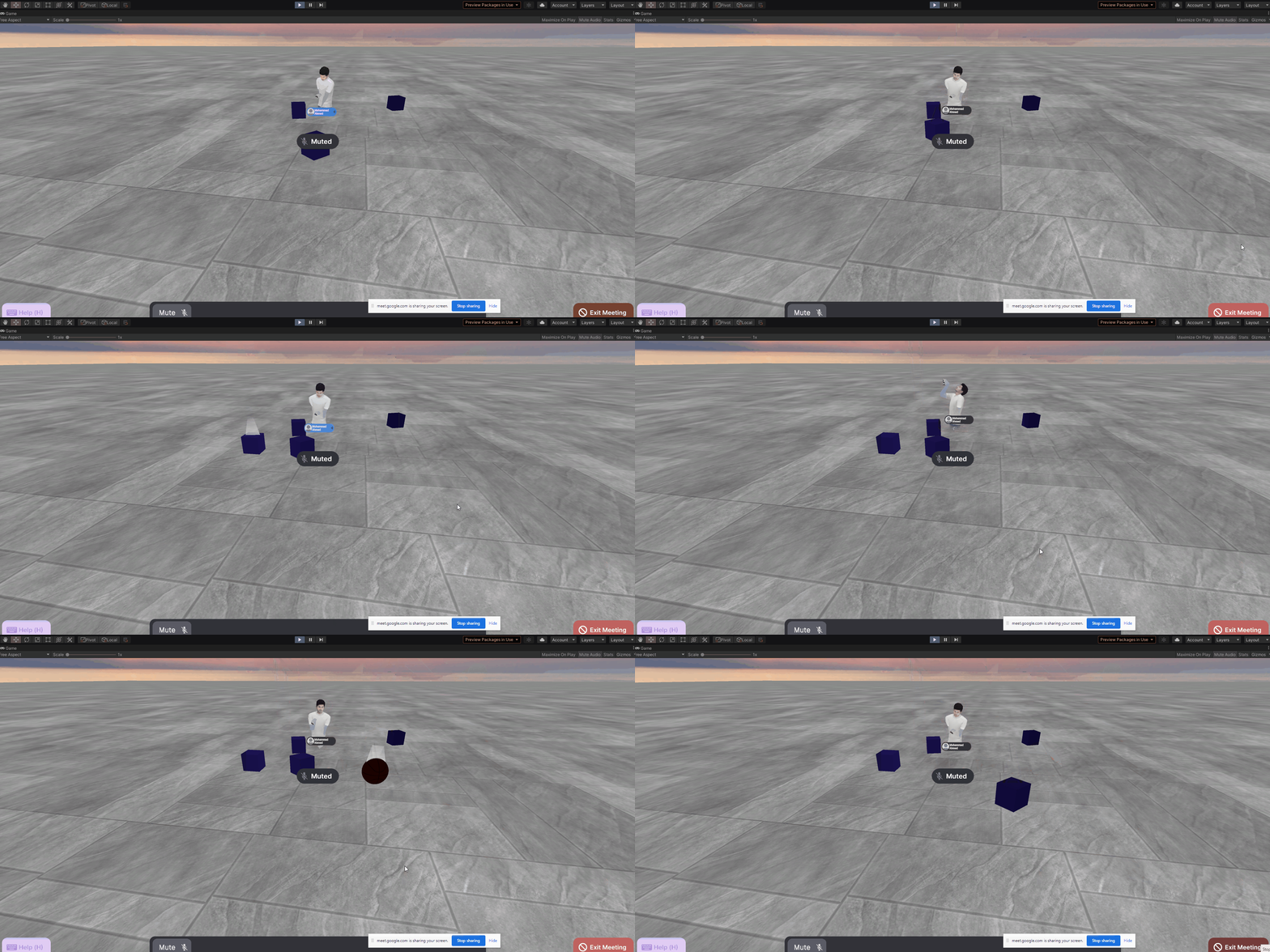
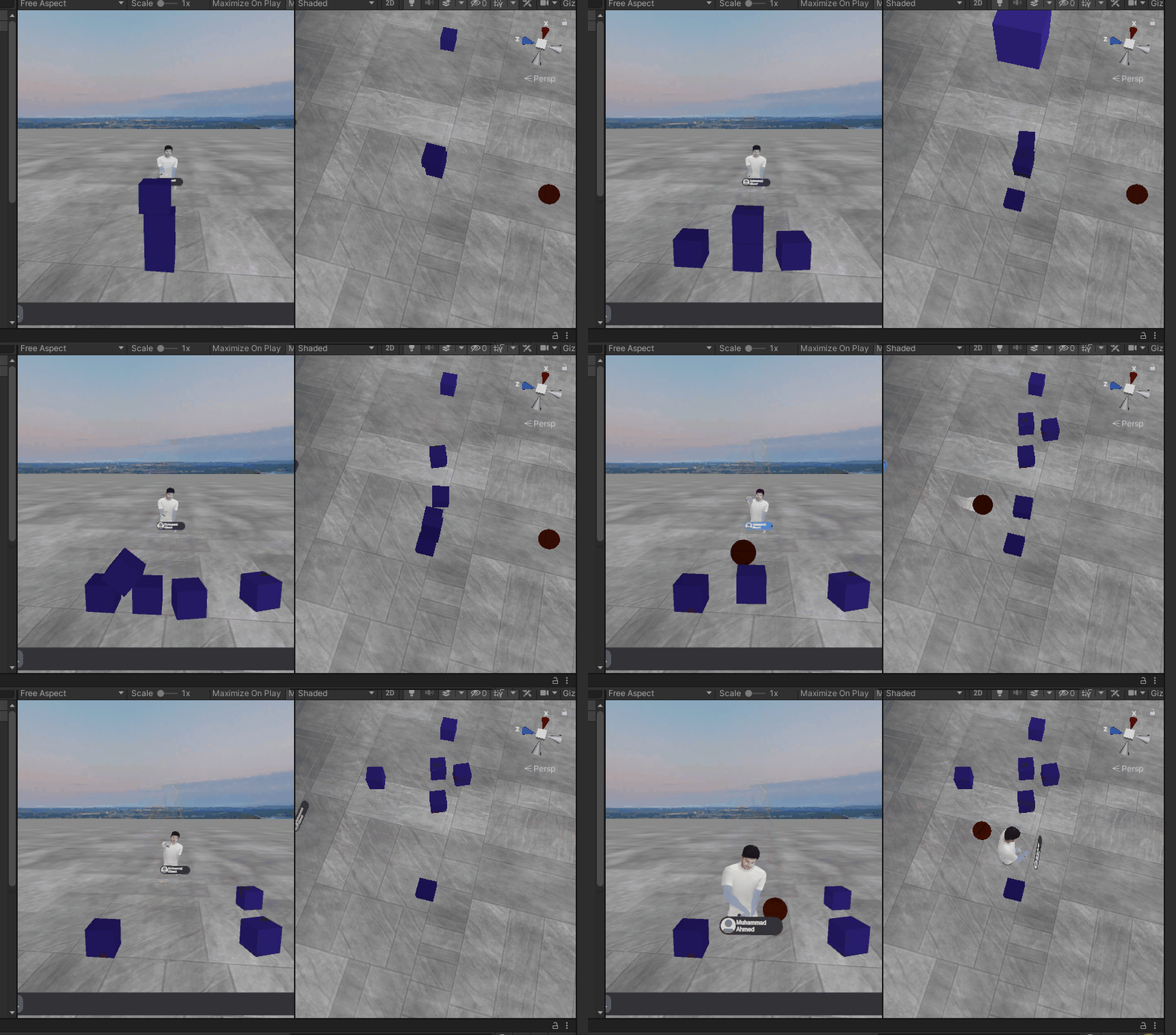
open source · .net 8 + unity
FigNet
My open-source networking framework in .NET. On top of it, Entangle adds the room and gameplay layer, and FnVoice handles real-time voice. Together they cover the parts most teams license.
what i built
- FigNet: a transport-agnostic .NET networking framework (ENet, LiteNetLib, WebSocket).
- Entangle: the room layer, with area-of-interest, subscription and delta replication, three authority models, and self-healing state sync that scales past 300 players.
- FnVoice: a self-contained voice engine (Opus + native WebRTC DSP) that replaces a commercial dependency, cross-compiled for 7 platforms.
games & tools
PokerVR 2018–19
Social VR poker with a live community, ported to Oculus Quest as a ground-up rebuild and shipped on the store. I owned the systems that let a small team move fast across Rift, Gear/Go and Quest: an automated character pipeline, a draw-call optimization that took the friends UI from roughly 40 draw calls to 1, and a single-codebase build pipeline spanning every platform.
Automated character pipeline
Adding a new avatar was a manual, hour-long job. I built a Unity editor tool that generates platform-specific prefabs (Rift and Gear/Quest) from an FBX, driven by XML meta data, cutting integration from over an hour to under 5 minutes.
Draw-call optimization (~40 to 1)
Each customized avatar in the friends list cost 3-4 draw calls, up to roughly 40 per page. I pre-rendered every combination into a Texture2DArray and wrote a custom UI shader that billboards each avatar from a single index, collapsing the whole list to one draw call.
Single codebase and build pipeline
Quest, Rift and Gear/Go started as separate projects. I unified them under one codebase, with code-only scene bases plus per-platform art and editor tools that swap materials, toggle scripting symbols and set build scenes automatically, cutting platform switches from hours to minutes.
games & tools
Epic Battles of History 2014–18
Historical strategy card game shipped on Steam. As client-side lead I set up each of the core game systems, then onboarded junior developers, distributed the work across the team and led it day to day, while still building major features myself. I owned the editor tooling and build automation, and solved the 2D and 3D art-pipeline integration. I added a patching system that shipped only the diff, so players got fast incremental updates instead of full re-downloads. Another major feature was the replay system: matches were re-run as a non-interactive simulation driven purely by the recorded match history and commands, so any game could be played back exactly as it happened. I also took the title cross-platform.
games & tools
Coda Quest 2014–18
An online educational RPG that taught kids real skills through play. I worked across the client and server gameplay systems: a crafting system for combining materials into new gear, a player-to-player trading system with the validation and safeguards an in-game economy needs, and NPC behavior that drove quests and world interactions. On the networking side I built the client/server zone-selection system that routed players into the correct world zones and kept them synchronized as they moved between areas, so the world stayed populated and responsive.
games & tools
Cthulhu Realms 2014–18
Digital card game. As a junior developer I built the entire game UI, back when the new Unity UI (uGUI) had only just launched, so a lot of it meant working the system out from first principles.
games & tools
Widget (UI) Manager 2016
Code-free UI animation and management tool, adopted studio-wide and published on the Unity Asset Store.
games & tools
RGB Box Runner 2015
A fast-paced endless runner in C#/XNA, built from scratch during university summer breaks and featured by Microsoft on the Windows Phone Store in 4 countries. I designed the whole game as reusable modules. Level generation reads a text file and stitches segments together so the world feels endless, and the same tile map both draws the level and drives collision detection. UI, buttons and input were built as reusable components, and characters animate through a sprite-based animation component. For performance on phones I drew only the tiles visible on screen, and each collision check tests the player against just the 9 surrounding tiles instead of the whole map.
games & tools
Brawl Stars Prototype 2021
A hobby prototype recreating Brawl Stars-style top-down multiplayer in Unity. The server is fully authoritative, written in C# with ENet-CSharp for networking. On top of it I implemented client-side prediction, lag compensation, and Network LOD (each player keeps a proximity list of nearby entities), plus custom 2D physics on the server for entity and map collision. I also built a dedicated map editor for designing arenas.